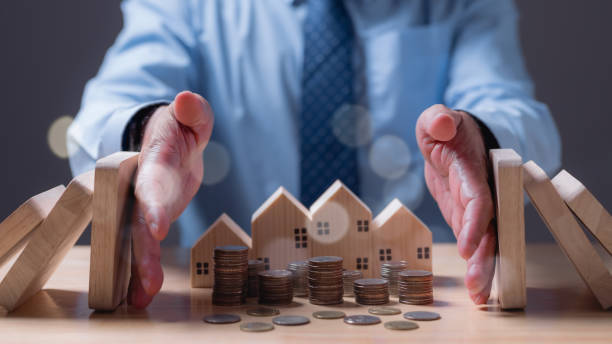
Why is real estate considered a safe investment? Discover how property investment offers stability, long-term growth, passive income, and protection against inflation.
When people talk about safe investments, real estate is almost always part of the conversation. Whether it’s buying a small apartment, a piece of land, or a commercial property, many investors believe property is one of the most secure ways to grow wealth.
But why is real estate considered a safe investment?
The answer lies in stability, tangible value, income potential, and long-term appreciation. Let’s break it down in simple terms.
Real Estate Is a Tangible Asset
One of the biggest reasons real estate feels safe is because it is physical. You can see it, touch it, and use it.
Unlike stocks or cryptocurrencies, which exist digitally and can fluctuate dramatically in a single day, property is a real, usable asset. Even if market prices temporarily drop, the land and building still exist.
This physical nature gives investors psychological comfort. It feels more secure because it’s not just numbers on a screen — it’s something concrete.
Property Values Generally Increase Over Time
While real estate prices can fluctuate in the short term, historically, property values tend to increase over long periods.
As population grows and urban areas expand, demand for housing and commercial spaces rises. Land is limited. Cities cannot expand infinitely in every direction. This limited supply combined with growing demand naturally pushes property prices upward over time.
Investors who hold property for many years often benefit from steady appreciation.
Rental Income Creates Steady Cash Flow
Another reason real estate is considered a safe investment is rental income.
When you buy property and rent it out, you generate monthly income. This steady cash flow can cover loan payments, maintenance costs, and even provide profit.
Unlike stocks that depend mainly on price growth, real estate can produce regular income regardless of short-term market movements.
For many investors, this predictable income adds a layer of financial security.
Protection Against Inflation
Inflation reduces the purchasing power of money over time. But real estate often acts as a hedge against inflation.
As prices of goods and services rise, property values and rental rates also tend to increase. This means your investment can grow alongside inflation rather than losing value.
For long-term investors, this protection is extremely important.
Lower Volatility Compared to Stock Markets
Stock markets can be highly volatile. Prices can drop sharply due to global events, economic changes, or company-specific problems.
Real estate markets usually move more slowly. Property prices do not change overnight. This slower movement makes it less stressful for investors.
While real estate is not risk-free, it is generally less volatile compared to equities and cryptocurrencies.
Demand for Housing Is Constant
One basic reason real estate feels safe is simple — people always need a place to live.
Housing is a necessity, not a luxury. Even during economic downturns, people still require homes. While demand patterns may shift between buying and renting, the need for shelter remains constant.
This fundamental demand gives real estate long-term stability.
Leverage Increases Investment Potential
Real estate allows investors to use leverage. This means you can buy property using borrowed money, typically through a home loan.
With a relatively small down payment, you can control a high-value asset. If property prices increase, your returns are calculated on the full value, not just your initial investment.
While leverage increases both risk and reward, when managed carefully, it can significantly grow wealth over time.
Tax Benefits
In many countries, real estate investors receive tax advantages. These may include deductions on mortgage interest, property taxes, maintenance expenses, and depreciation.
These benefits reduce the overall cost of ownership and improve net returns.
Such financial advantages make property investment even more attractive compared to some other asset classes.
Emotional and Social Value
Real estate is not only financial — it also carries emotional value.
Owning property often represents stability and success. Many people feel proud to own land or a home. This emotional connection strengthens the perception of safety.
Even if market conditions fluctuate, owners know they have something valuable that can be used personally if needed.
Long-Term Wealth Creation
Many wealthy individuals have a portion of their assets in real estate. It plays a major role in long-term wealth building.
Property can be passed down to future generations. Over decades, its value may multiply significantly. Rental income can also increase gradually over time.
Because of this long-term potential, investors see real estate as a foundation asset rather than a short-term speculation tool.
Risks Still Exist
Although real estate is considered safe, it is not completely risk-free.
Property prices can fall during economic crises. Maintenance costs, property taxes, and unexpected repairs can reduce profits. Finding reliable tenants can sometimes be challenging.
Location is also critical. A property in a growing area may appreciate quickly, while one in a declining area may struggle.
Therefore, careful research and planning are essential.
Why Investors Trust Real Estate
So, why is real estate considered a safe investment?
Because it is tangible.
Because it tends to appreciate over time.
Because it provides steady rental income.
Because it protects against inflation.
Because demand for housing is constant.
Because it allows leverage and tax advantages.
Real estate combines stability with growth potential. It may not always offer rapid returns like high-risk assets, but it provides consistent and reliable wealth-building opportunities.
For investors seeking long-term security rather than quick profits, property often becomes the preferred choice.
In the end, real estate is considered safe not because it has zero risk, but because its risks are manageable and its long-term fundamentals remain strong.