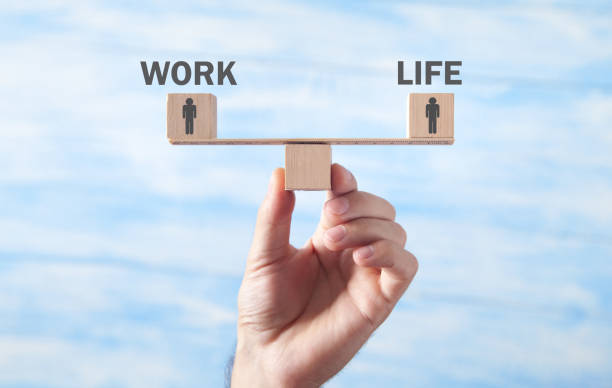
Honestly, this question feels more real now than ever before. Everyone talks about balance like it’s some simple formula — work 8 hours, relax 8 hours, sleep 8 hours. But in real life? It rarely works that cleanly.
The biggest reason work-life balance feels impossible is because work doesn’t really “end” anymore. Earlier, people would leave the office and that was it. Now, with smartphones, emails, Slack messages, and endless notifications, work follows you home. Even if you’re not physically working, mentally you still are. You’re thinking about tomorrow’s meeting, unfinished tasks, targets, or that one message from your boss that sounded slightly serious.
Technology was supposed to make life easier. In some ways it did. But it also blurred the lines. Remote work especially changed everything. After the pandemic, companies realized employees can work from anywhere. Sounds flexible, right? But flexibility sometimes turns into “always available.” You’re at home, so why not reply quickly? Why not finish that small task? Slowly, your living room becomes your office.
Another reason Why Is Work-Life Balance Hard to Maintain? is financial pressure. Let’s be honest — life is expensive. Rent, EMI, groceries, school fees, medical bills. Especially in countries like India where competition is intense, people feel they must work harder just to stay stable. Many professionals take side hustles to earn extra income. On paper, it sounds smart. In reality, it reduces personal time even more.
Then there’s workplace culture. Some companies say they support balance, but the real expectation is long hours. If someone leaves exactly at 6 PM, others might think they’re not serious about their job. Promotions often go to people who “go the extra mile.” Over time, employees start sacrificing weekends, sleep, and family time just to prove commitment.
Social media also plays a weird role. You scroll Instagram or LinkedIn and see people celebrating promotions, new businesses, certifications, productivity routines. It creates silent pressure. You feel like you’re always behind. So even when you have free time, you feel guilty resting. That guilt itself destroys balance.
Another reason Why Is Work-Life Balance Hard to Maintain? is personal ambition. Sometimes the pressure isn’t external — it’s internal. Many people genuinely want success. They want growth, better lifestyle, recognition. Ambition isn’t bad. But when it becomes extreme, you forget to slow down. You say, “I’ll rest after I achieve this.” But there’s always another goal.
Family expectations also matter. In many cultures, especially in India, people carry responsibility for parents, siblings, and extended family. You’re not just working for yourself. That responsibility adds emotional weight. Even if you want to reduce workload, you hesitate because others depend on you.
Let’s not ignore poor time management. Sometimes work-life balance is hard because we don’t manage time properly. Endless scrolling, procrastination, unnecessary meetings — they eat up productive hours. Then work spills into personal time. It’s not always the company’s fault. Sometimes it’s habits.
Another hidden factor is fear. Fear of losing the job. Fear of being replaced. Fear of missing opportunities. In competitive industries, employees feel replaceable. So they overwork to stay relevant. They attend every meeting, volunteer for every project, respond instantly to every email. Slowly, exhaustion builds.
Mental health also connects strongly to this issue. Stress reduces energy. When you’re mentally drained, even small tasks feel heavy. You come home tired but can’t truly relax because your mind is racing. You may watch Netflix, but you’re not really “resting.” True rest requires peace, and stress steals that.
The concept of balance itself might be unrealistic sometimes. Life doesn’t always stay equal. Some weeks require more work. Some periods require more family focus. Maybe instead of perfect balance, we should think about flexibility. Some days work dominates. Other days personal life does. Expecting 50-50 daily might be too ideal.
Another reason Why Is Work-Life Balance Hard to Maintain? is unclear boundaries. If you don’t set limits, people won’t know them. If you always reply instantly at midnight, colleagues assume you’re available at midnight. It becomes your default identity. Setting boundaries feels uncomfortable at first, but without them, imbalance becomes permanent.
Also, modern careers are more demanding than before. Earlier, one skill could sustain a job for years. Now industries change fast. Technology updates constantly. People must learn continuously to stay competitive. That means courses, certifications, networking — all outside normal work hours.
Interestingly, sometimes the problem isn’t too much work — it’s emotional attachment to work. Some people tie their identity completely to their career. When work becomes your main source of validation, you prioritize it over everything. Personal relationships slowly weaken.
Urban lifestyle contributes too. Long commute times in big cities eat hours daily. Imagine working 9 hours and traveling 2–3 hours. By the time you reach home, there’s barely energy left for family or hobbies. It’s not just about workload, it’s about total time consumption.
And let’s talk about guilt again. When you focus on work, you feel guilty about not spending time with family. When you spend time with family, you worry about unfinished work. So you’re never fully present anywhere. That emotional conflict is exhausting.
So, Why Is Work-Life Balance Hard to Maintain? Because modern life is layered. Technology, ambition, money pressure, competition, workplace culture, social expectations, and personal fears all mix together. It’s not one single reason. It’s a combination.
But maybe the solution isn’t perfect balance. Maybe it’s conscious choices. Understanding what truly matters. Some people are okay with intense work years to build stability. Some prefer slower growth with more peace. There’s no universal formula.
Small steps can help though. Turning off notifications after certain hours. Planning realistic goals. Learning to say no sometimes. Spending even 30 minutes daily fully present with family without phone distraction. These small boundaries slowly rebuild control.
At the end, work is important. It gives income, purpose, and growth. But life is bigger than work. Health, relationships, peace of mind — they’re not replaceable. If we ignore them too long, success loses meaning.
And that’s exactly why Work-Life Balance Hard to Maintain — because balancing ambition and peace in today’s fast world is harder than ever.