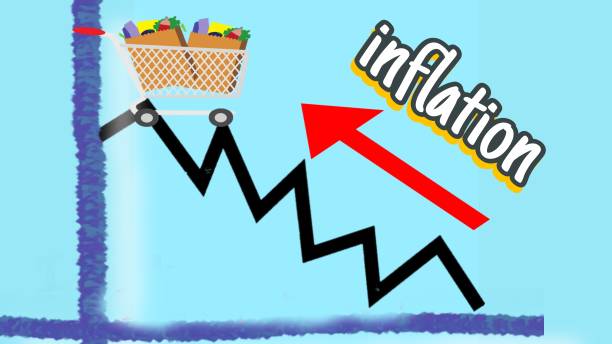
Inflation is something we all hear about almost every year. Sometimes it rises slowly and people adjust. But sometimes it jumps quickly, and that’s when things start to feel uncomfortable. Groceries cost more. Fuel prices increase. Rent goes up. Suddenly your salary feels smaller even though the number hasn’t changed.
So, what causes inflation to rise rapidly? It’s not just one single reason. Usually, it’s a mix of economic pressure, policy decisions, global events, and human behavior. Let’s break it down in a simple way.
First, one of the biggest reasons is too much demand in the economy. When people have more money to spend — maybe because of tax cuts, government stimulus, or strong job growth — they start buying more goods and services. Businesses see high demand and raise prices. If supply cannot keep up, prices climb even faster. Economists call this demand-pull inflation. It’s basic supply and demand. More buyers, limited products, higher prices.
A good example of this happened after the COVID-19 pandemic when governments around the world, including the Federal Reserve and the Reserve Bank of India, supported their economies with low interest rates and financial stimulus. People had money to spend, but supply chains were still weak. That imbalance pushed prices up quickly.
Second, rapid inflation can happen because of supply shocks. This is when something suddenly limits production. For example, if oil production drops due to war or political conflict, fuel prices rise. Since fuel affects transportation, electricity, and manufacturing, almost everything becomes more expensive. The COVID-19 pandemic disrupted factories and shipping worldwide. Even simple items like microchips became hard to find. As a result, car prices, electronics, and appliances became more expensive.
Third, printing too much money is another cause. When central banks increase the money supply too quickly, the value of money decreases. Think of it like this — if everyone suddenly has more cash, that cash becomes less valuable. Historically, extreme examples like Zimbabwe show how uncontrolled money printing can lead to hyperinflation. In such cases, prices can double within days or weeks. While most countries don’t face such extreme situations, excessive monetary expansion can still push inflation up rapidly.
Another major reason is rising production costs, also known as cost-push inflation. If raw materials become expensive, companies increase prices to maintain profits. For example, if steel prices go up, car manufacturers raise car prices. If wheat prices rise, food products become more expensive. Businesses rarely absorb costs for long — they pass them on to consumers.
Wage growth can also play a role. Now, higher wages are generally good. But if wages rise too fast without matching productivity, companies increase prices to cover payroll expenses. This creates what economists call a wage-price spiral. Workers demand higher wages because prices are rising. Businesses then increase prices to pay higher wages. And the cycle continues.
Another factor is currency depreciation. If a country’s currency weakens, imports become more expensive. For countries like India that import oil, a weaker currency directly increases fuel costs. When imports cost more, inflation can rise quickly across multiple sectors.
Expectations also matter more than people think. If businesses and consumers expect inflation to rise, they behave differently. Companies may increase prices early. Workers demand higher salaries. Investors adjust pricing. This psychological factor can accelerate inflation even before real shortages occur.
Government debt is another contributor. When governments borrow heavily and finance spending by creating money rather than raising taxes, inflation risks increase. It doesn’t always happen immediately, but over time, it can weaken currency stability and purchasing power.
Global events can amplify inflation rapidly. Wars, trade restrictions, pandemics, and energy crises all affect supply chains. For example, geopolitical tensions affecting oil supply have historically led to sharp inflation spikes. The global economy today is highly connected. A factory shutdown in one country can impact prices worldwide.
Interest rates also play a crucial role. When central banks keep interest rates too low for too long, borrowing becomes cheap. People take more loans for homes, cars, and businesses. Spending increases. If production doesn’t rise at the same pace, inflation speeds up. That’s why central banks like the Federal Reserve and Reserve Bank of India increase interest rates when inflation gets out of control. Higher rates reduce borrowing and slow spending.
Sometimes rapid inflation is temporary. For example, seasonal supply disruptions can cause short-term price spikes. But when inflation continues for months or years, it becomes a serious economic challenge.
I personally think inflation feels worst not when prices go up slowly, but when they jump suddenly. You don’t get time to adjust. Your savings lose value quietly. Fixed-income earners suffer the most because their income doesn’t rise automatically with prices.
There’s also something called imported inflation. If global commodity prices rise — especially oil, gas, or food — countries that depend on imports feel the impact quickly. For example, oil-exporting nations may benefit, but oil-importing countries struggle with rising fuel bills.
Technology and innovation can sometimes reduce inflation by improving efficiency. But when supply chains break or productivity falls, the opposite happens.
It’s important to understand that inflation itself isn’t always bad. Moderate inflation is actually normal in a growing economy. It encourages spending and investment. But when inflation rises rapidly and unpredictably, it creates uncertainty. Businesses delay investments. Consumers cut spending. Economic growth slows down.
Central banks usually aim to keep inflation around 2–4%. When it crosses that range significantly, aggressive measures are taken. These include raising interest rates, reducing money supply, or tightening fiscal spending.
In simple terms, rapid inflation is usually caused by:
-
Too much demand
-
Too little supply
-
Excessive money creation
-
Rising production costs
-
Weak currency
-
Global disruptions
-
Policy mistakes
It’s rarely just one reason. It’s more like a chain reaction. One problem triggers another, and suddenly prices start rising everywhere.
Understanding what causes inflation to rise rapidly helps us make better financial decisions. During high inflation periods, people often shift investments to assets like real estate, gold, or equities to protect purchasing power.
At the end of the day, inflation is about balance. When money, supply, demand, and confidence fall out of balance, prices react. And when that imbalance is strong, inflation rises rapidly.
That’s the real answer to the question — what causes inflation to rise rapidly? It’s a mix of economics, policy, global events, and human behavior working together, sometimes in the wrong direction.