Not very long ago, when people talked about cars, they mostly discussed engines, mileage, torque, suspension, and maybe the brand value. But now if you really look closely, the question feels different:
Honestly, it’s not just a catchy line. It’s actually becoming true.
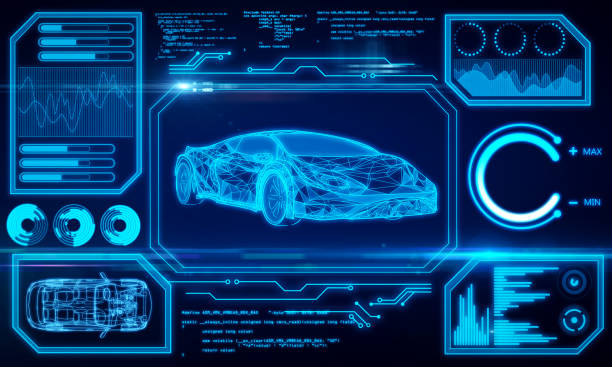
If you open the hood of a modern car, you still see an engine (or battery pack in EVs). But the real brain of the car? That’s hidden in lines of code.
Take cars from companies like Tesla for example. They often describe their vehicles as “computers on wheels.” And it’s not marketing drama. From acceleration control to entertainment screens, almost everything runs on software. Even traditional brands like BMW and Mercedes-Benz now talk more about operating systems and digital features than just engine power.
So what exactly changed?
First, electronics slowly took over mechanical systems. Earlier, steering was purely mechanical. Brakes were mechanical-hydraulic. Now we have electronic power steering, drive-by-wire throttle systems, electronic stability control, and advanced braking systems. These systems rely heavily on sensors and microprocessors. A small computer constantly checks speed, wheel rotation, road grip, steering angle — all in milliseconds.
Second, infotainment systems completely changed the driving experience. Cars now come with giant touchscreens, voice assistants, navigation systems, and app integration. When Apple introduced Apple CarPlay and Google launched Android Auto, it blurred the line between smartphone and car. Your vehicle now syncs with your contacts, music, maps, and even WhatsApp messages. That’s pure software behavior, not mechanical engineering.
And then comes the big shift — over-the-air (OTA) updates.
Earlier, if your car had a problem, you had to visit a service center. Now, companies like Tesla send software updates remotely. Sometimes your car wakes up with new features. Imagine buying a car and months later it becomes faster, smarter, or safer — without touching a single nut or bolt. That’s something mechanical machines simply couldn’t do before.
Another huge reason modern cars feel more like software is advanced driver assistance systems (ADAS). Features like lane-keeping assist, adaptive cruise control, automatic emergency braking, blind spot monitoring — these all depend on cameras, radar, lidar, and algorithms. The car is constantly “thinking.” It’s processing data in real time, predicting movements, calculating risk. In some premium models, it even parks itself.
Self-driving technology pushes this even further. While full autonomy is still under development, the idea itself shows how software-driven cars have become. Autonomous systems rely on artificial intelligence, machine learning, and massive data analysis. Mechanical parts just follow digital commands.
Electric vehicles (EVs) add another layer to this transformation. Companies like Tata Motors and Hyundai are heavily investing in electric platforms. EVs are naturally more software-centric because battery management systems, regenerative braking, thermal management, and charging optimization all require complex code. In fact, battery efficiency improvements often come from software tuning rather than hardware changes.
There’s also the growing importance of cybersecurity. Think about it — if your car runs on software and connects to the internet, it becomes vulnerable like any other smart device. Automakers now hire cybersecurity experts to protect vehicles from hacking. This was never a concern in purely mechanical cars. Nobody could “hack” a carburetor.
Even performance tuning has changed. Earlier, people modified engines physically to get more power. Today, many performance upgrades happen through ECU (Engine Control Unit) remapping — basically changing software settings. The hardware remains the same, but the behavior changes because the code changes.
User experience is another reason. Car dashboards are now digital clusters. You can customize themes, layouts, and driving modes. In some cars, you can even buy additional features like heated seats or performance boosts through subscription models. It sounds strange, but it’s similar to unlocking premium features in an app.
This shift also affects how cars are built. Automakers are hiring more software engineers than mechanical engineers in some departments. Vehicles now contain millions of lines of code. To put it simply, a modern car may have more code than a commercial airplane had two decades ago.
Of course, the mechanical side still matters. Wheels, suspension, chassis, brakes — these are physical components that no software can replace. But software now controls how efficiently these components work together. It’s like the body is mechanical, but the brain is digital.
There’s also a business reason behind this transformation. Software allows companies to earn recurring revenue. Subscription-based features, connected services, navigation updates, premium driving modes — all generate income even after the car is sold. That changes the whole automotive business model.
And let’s be honest — customer expectations have changed too. People don’t just want a vehicle; they want a smart device. If their phone gets updates and new features, why shouldn’t their car? We live in a digital-first world, so cars had to evolve in the same direction.
But this shift also has challenges. Software bugs can cause serious problems. We’ve already seen recalls due to faulty code. Unlike a simple mechanical defect, software errors can affect thousands of vehicles at once. And fixing them sometimes isn’t as simple as updating an app.
Still, the direction is clear. The future car won’t just be judged by horsepower or engine sound. It will be judged by user interface smoothness, update frequency, AI intelligence, connectivity features, and digital ecosystem.
So when someone asks, What Makes Modern Cars More Software Than Machines? the answer is layered. It’s the sensors replacing mechanical linkages. It’s the algorithms making driving decisions. It’s OTA updates improving performance overnight. It’s EV battery systems controlled by complex code. It’s connectivity turning cars into rolling smart devices.
Mechanical engineering built the foundation. But software now defines the experience.
And honestly, this transformation is just getting started. In the coming years, cars might feel even less like machines and more like intelligent companions on wheels.